When Homework Changes the Mood of the Whole House
Some families can feel the room change the moment homework comes out. When schoolwork affects the whole house, the issue may be bigger than motivation or routine.
June 2, 2026
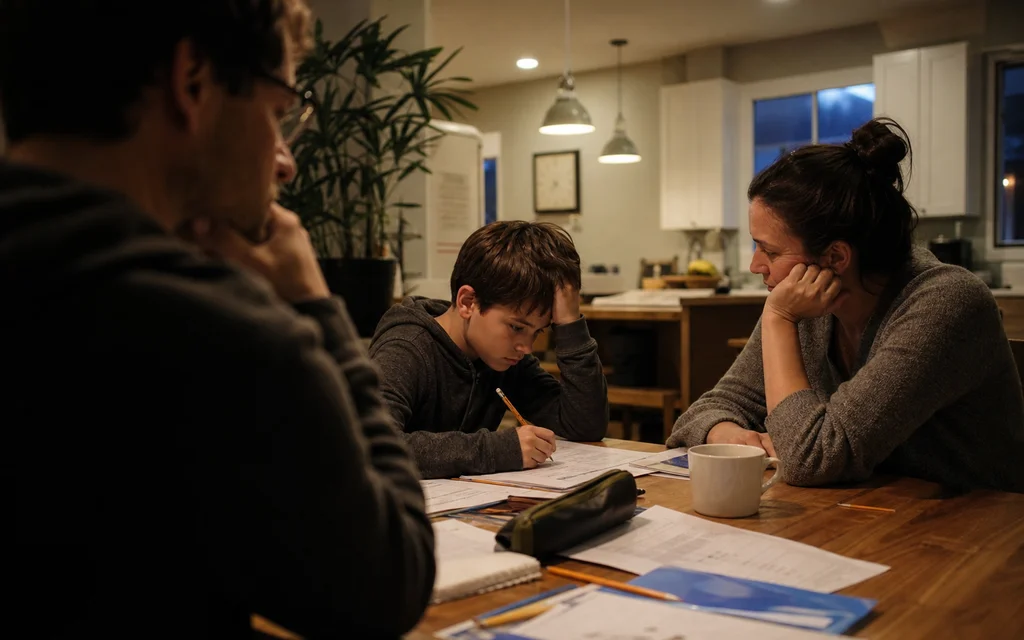
Some families can feel the room change the moment homework comes out. When schoolwork affects the whole house, the issue may be bigger than motivation or routine.
June 2, 2026
In some homes, homework has a mood.
It starts before the book opens. A sigh. A slammed backpack. A parent trying to stay calm. A child already bargaining, stalling, or shutting down.
Everyone knows what is coming.
The assignment may not even be that long. But somehow it takes over the evening. The parent becomes the reminder, the negotiator, the tutor, the emotional regulator, and sometimes the enemy. The child becomes defensive, tearful, silly, angry, or unreachable.
By the end, the homework may be finished, but everyone feels worse.
When homework changes the mood of the whole house, it is easy to think the problem is behaviour. The child is refusing. The parent is too impatient. The routine is not strict enough. The distractions need to go.
Sometimes structure helps. A snack, a break, a quieter space, or a predictable routine can make a difference. But when the same conflict repeats again and again, it may be time to ask what homework is asking of the child.
Homework is not one task. It can require reading, writing, spelling, planning, memory, attention, stamina, organization, and emotional control. If any of those areas feel hard, homework can become the place where all the pressure shows up.
A child who struggles with writing may avoid starting. A child who struggles with reading may say the work is boring. A child who struggles with spelling may ask for help constantly or refuse to write. A child who feels embarrassed may act careless because acting careless feels safer than looking incapable.
The parent sees the resistance. The child feels the difficulty.
Both can be true.
Over time, homework can become a family pattern. The child expects frustration. The parent expects resistance. The evening begins with tension because everyone has lived this scene before.
That history matters. Once homework becomes emotionally loaded, even a small assignment can trigger a big reaction.
Parents often say, “If they would just do it, it would take ten minutes.” That may be true from the outside. But from the child’s perspective, the task may not feel like ten minutes. It may feel like failure, correction, and effort they cannot explain.
This does not mean parents should do the work for the child. It does mean the family may need a different way to understand what is happening.
Helpful questions include:
These clues can help separate behaviour from overload.
At Alphabetter, we do not look at homework stress as a simple discipline issue. We look at the learning demands underneath the conflict. Sometimes the child needs support with foundational literacy patterns. Sometimes the parent needs a clearer way to guide without becoming responsible for every answer. Often, the family needs shared language so homework stops feeling like a nightly battle.
The goal is not to make every evening perfect. Families are real. Homework can still be annoying. Children still get tired. Parents still lose patience.
But homework should not regularly damage the relationship.
When the underlying patterns become clearer, the mood can begin to shift. Parents can respond with more precision. Children can feel less blamed. And the family can begin to separate the child from the struggle.
That is often the first relief.
— Diane Devenyi, JD, MEd
Book a private consultation or explore the Hidden Genius Literacy Assessment.