Messy Writing Is Rarely Just Messy Writing
Messy writing can be easy to dismiss as rushing, carelessness, or lack of effort. But for many children, what shows up on the page is only the visible part of a much bigger learning pattern.
June 2, 2026
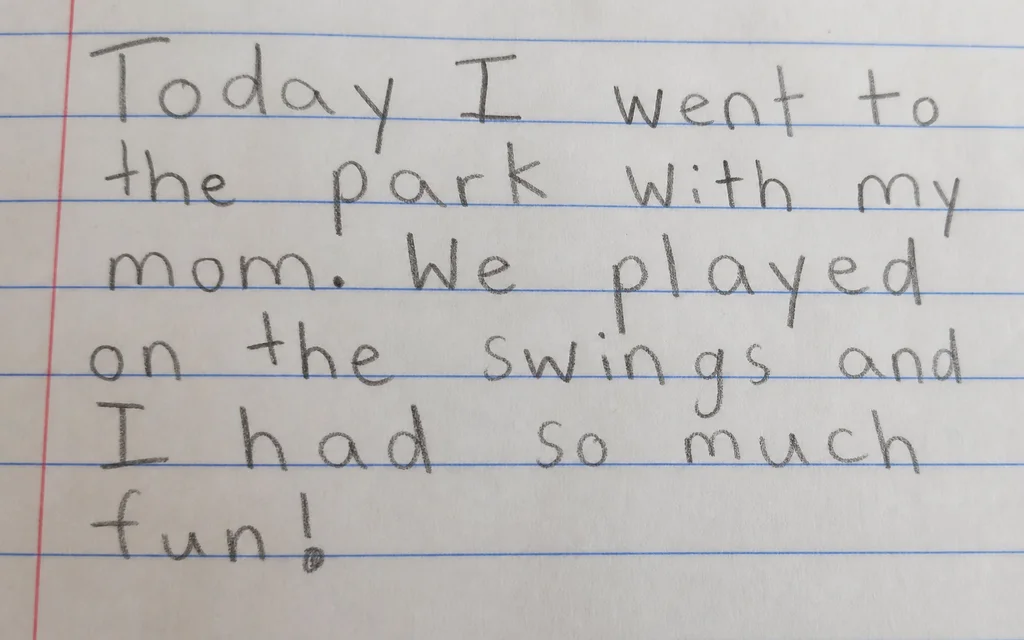
Messy writing can be easy to dismiss as rushing, carelessness, or lack of effort. But for many children, what shows up on the page is only the visible part of a much bigger learning pattern.
June 2, 2026
Messy writing can be one of the most frustrating things for parents to understand.
Your child may know the answer. They may explain it beautifully out loud. They may have big ideas, strong opinions, and a vocabulary that surprises you. Then they pick up a pencil, and everything falls apart.
Letters float above the line. Words crowd together. Spacing disappears. Some letters are reversed, oversized, unfinished, or formed in a different way every time. A short written answer becomes a full-body effort. What should take ten minutes stretches into an hour.
It is tempting to call this careless.
Sometimes teachers will say, “They just need to slow down.” Parents may say, “You can write neatly when you try.” The child may even believe that about themselves. But messy writing is rarely just messy writing.
Often, it is information.
Writing asks the brain and body to do many things at once. A child has to remember what they want to say, hold the sentence in mind, choose the words, spell them, form the letters, manage spacing, stay on the line, organize the page, and keep going long enough to finish. If any part of that system is shaky, the page can look messy even when the child is trying hard.
This is why messy writing can be misleading. The final page may look careless, but the process may have been exhausting.
Some children struggle with formation. They do not have a consistent, automatic way to make letters. They may start letters from the bottom, switch direction, build letters in pieces, or form the same letter differently from one line to the next. When letter formation is not automatic, writing takes far more attention than it should.
Some children struggle with spacing and placement. They may understand words and sentences, but have trouble organizing them visually on the page. The writing can become crowded, uneven, or hard to follow.
Some children struggle with stamina. Their writing may begin legibly and then fall apart as the assignment continues. This is not always laziness. It can be a sign that the work is taking too much energy to sustain.
Some children struggle with the gap between thought and output. Their mind moves quickly, but the pencil cannot keep up. They may become frustrated, skip words, shorten answers, avoid details, or give up before they have shown what they know.
And some children have lost confidence. Once a child has been told enough times that their writing is messy, they may approach the page already expecting to fail. That emotional weight matters. It changes how they begin, how long they persist, and whether they are willing to try again.
The important shift is this: messy writing should not be treated only as a neatness problem. It should be looked at as a learning clue.
Instead of asking only, “How do we make this neater?” it may help to ask:
These observations can give parents a clearer picture of what might be underneath the struggle.
At Alphabetter, messy writing is not treated as a character flaw. It is not assumed to be laziness, defiance, or lack of intelligence. It is looked at as part of a larger pattern that may involve letter formation, alphabet confidence, sequencing, recall, stamina, written expression, and self-belief.
A child who writes messily may not need another lecture about trying harder. They may need a different starting point.
That starting point is often the foundation underneath the writing — the letters, patterns, movements, and confidence that make written expression possible.
When that foundation becomes clearer, the conversation changes. The child is no longer “the messy writer.” The family can begin to understand what the writing has been trying to say all along.
— Diane Devenyi, JD, MEd
Book a private consultation or explore the Hidden Genius Literacy Assessment.