How to Talk to Teachers When You Suspect Something Deeper
School conversations go better when parents bring observations instead of panic. If you suspect something deeper, the right language can help teachers see the pattern too.
June 2, 2026
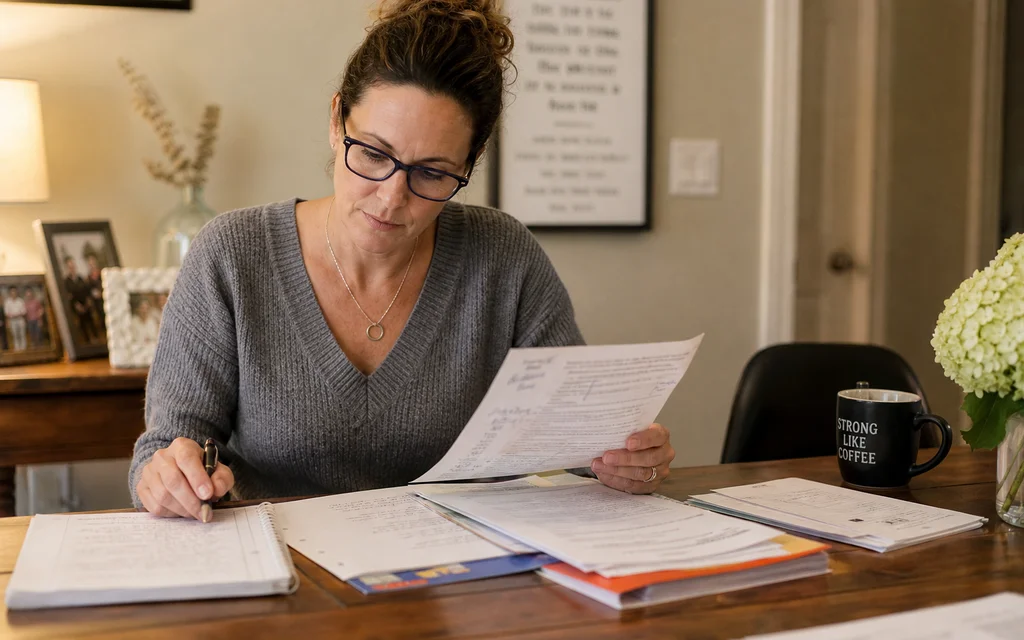
School conversations go better when parents bring observations instead of panic. If you suspect something deeper, the right language can help teachers see the pattern too.
June 2, 2026
Talking to a teacher about a learning concern can feel intimidating.
You do not want to overreact. You do not want to sound like you are blaming the school. You may not have a diagnosis, a report, or the right words. You simply have a feeling that something is deeper than effort.
That feeling matters.
Parents often see patterns that do not fully show up in the classroom. You see the homework tears, the long evenings, the avoidance, the comments your child makes about not being smart. You see how much energy the task takes after school, when your child has been holding it together all day.
Teachers see a different part of the picture. They see your child in a group, across subjects, compared with classroom expectations, and over time.
A good conversation brings those pictures together.
The most helpful way to begin is with observations, not conclusions. Instead of starting with “I think my child has dysgraphia” or “The work is too hard,” start with what you are seeing.
For example:
“We are noticing that written homework takes much longer than expected, especially when he has to write original sentences.”
“She can explain her ideas out loud, but the written answers are very short.”
“Spelling seems to be inconsistent, even with words we have practised.”
“Reading aloud is possible, but it leaves him very tired and frustrated.”
“Homework is starting to affect how she sees herself.”
This kind of language is hard to dismiss because it is specific.
It also helps to ask open questions:
You are not asking the teacher to solve everything in one meeting. You are asking them to look with you.
Bring examples if you can. A few writing samples, notes from homework, or a short list of patterns can make the conversation more concrete. You do not need a perfect binder. You need clear evidence of what keeps happening.
Try to avoid making the meeting only about grades. Grades can be useful, but they do not always show effort, fatigue, or emotional cost. A child may be passing and still struggling. A child may be compensating so hard that the problem is easy to miss.
You can say: “I’m less worried about one mark and more worried about the pattern we are seeing.”
That sentence often helps.
If the teacher suggests strategies, ask how you will know whether they are working. For example:
“Can we try this for three weeks and then check in?” “What should I look for at home?” “If the writing remains this hard, what would the next step be?”
This keeps the conversation practical.
It is also okay to mention outside support or assessment without making it adversarial. You might say:
“We are exploring whether there may be foundational literacy or writing patterns underneath this. If we learn more, we would be happy to share anything useful.”
At Alphabetter, we encourage parents to enter school conversations with clarity rather than panic. You do not have to diagnose your child to advocate well. You can describe patterns, ask thoughtful questions, and seek a shared understanding.
The goal is not to prove that something is wrong.
The goal is to help the adults around the child see what the child may not be able to explain yet.
That is advocacy.
— Diane Devenyi, JD, MEd
Book a private consultation or explore the Hidden Genius Literacy Assessment.