What to Bring to a School Meeting About Writing or Reading
A helpful school meeting does not require a perfect file. Bringing the right observations, samples, and questions can help everyone understand the pattern faster.
June 2, 2026
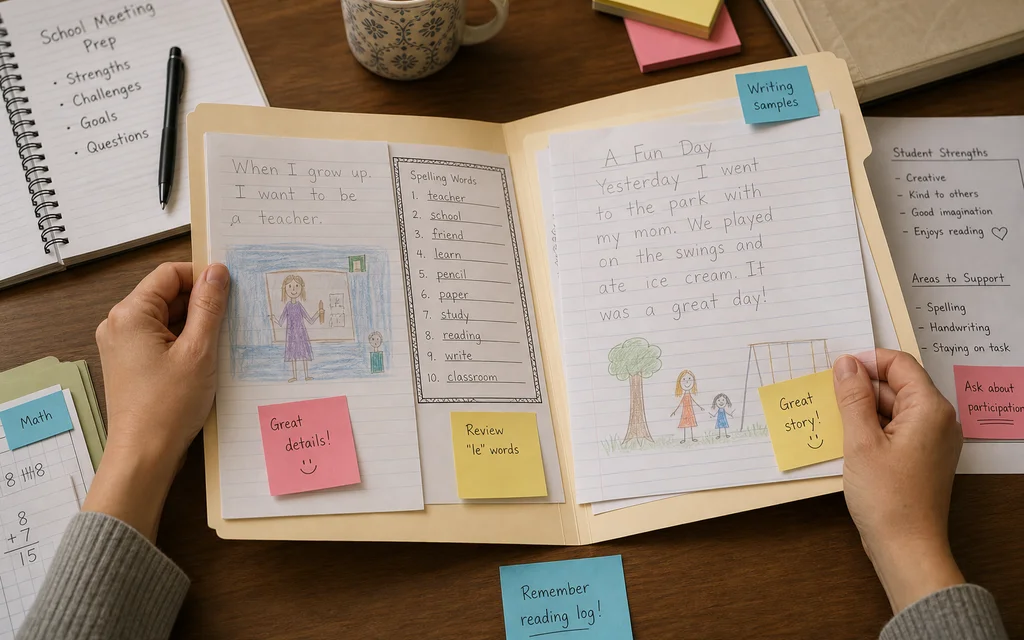
A helpful school meeting does not require a perfect file. Bringing the right observations, samples, and questions can help everyone understand the pattern faster.
June 2, 2026
When parents prepare for a school meeting, they often feel pressure to bring the perfect evidence.
A formal report. A diagnosis. A long history. The right terminology. A complete explanation of what is happening.
Those things can be helpful, but they are not the only way to have a useful conversation.
If you are concerned about writing or reading, the most important thing you can bring is a clear picture of the pattern.
Start with examples. Choose a few pieces of work that show what you are noticing. You do not need every worksheet from the year. Three to five samples can be enough if they show the issue clearly.
For writing, consider bringing:
For reading, bring notes rather than recordings unless the school requests them. You can write down what happens during reading homework:
It can also help to bring a short parent observation list. Keep it simple. One page is enough.
Use headings like:
What we see at home What seems hardest What helps What makes it worse What we are worried about Questions we have
This format keeps the meeting grounded.
Try to include the emotional pattern, not just the academic one. If your child is saying “I’m stupid,” crying over homework, refusing writing tasks, or losing confidence, that matters. Schools need to know when a learning issue is beginning to affect identity.
You might write: “Homework is taking 60–90 minutes on nights when the assignment appears short.” “She can explain answers out loud but writes very little.” “He avoids writing and becomes upset before starting.” “Spelling is inconsistent even with familiar words.” “Reading leaves her tired, and she remembers more when we read aloud.”
These are useful observations.
If your child has completed an outside assessment, bring the report or summary. If you are waiting for assessment, say so. If you are exploring support, you can mention that too.
What you do not need to do is diagnose the issue yourself. It is enough to say: “We are trying to understand what is underneath this pattern.”
Bring questions that invite collaboration:
Also ask for specifics. If the teacher says your child needs to “slow down,” ask: “What does slowing down look like in practice?” “Which part should we focus on first?”
If they say your child needs more practice, ask: “What kind of practice?” “How will we know if it is helping?”
The goal is to leave the meeting with a clearer next step, not just a general concern.
At Alphabetter, we often help parents organize what they are seeing before they know exactly what it means. A clear assessment or observation process can give families better language for school conversations. It can help move the discussion from “messy writing” or “not focusing” to more specific patterns involving formation, spelling, sequencing, reading effort, stamina, or confidence.
You do not have to arrive at the school meeting with all the answers.
But when you bring the right examples and questions, you make it easier for everyone to see the child more clearly.
— Diane Devenyi, JD, MEd
Book a private consultation or explore the Hidden Genius Literacy Assessment.